
In India’s varied climates, from hot summers to humid monsoons, effective building insulation is crucial for creating comfortable, energy-efficient spaces. Homeowners and developers are turning to better solutions that not only control indoor temperatures but also reduce energy bills and encourage sustainable practices. This blog explores INSUboard by Supreme Petrochem Ltd, a groundbreaking insulation material that sets new benchmarks in thermal protection for residential, commercial, and industrial projects.
INSUboard is an extruded polystyrene (XPS) rigid foam board that tackles significant challenges in construction. It offers outstanding resistance to heat transfer, moisture, and compression. Made by Supreme Petrochem Ltd, one of India’s top insulation companies, it uses modern extrusion technology to produce closed-cell insulation sheets suitable for roofs, walls, floors, and more. This guide examines INSUboard’s technical features, real-world uses, and advantages over traditional options, helping you make informed choices for energy-efficient building materials in your next project.
What Is INSUboard? Key Features and Technology
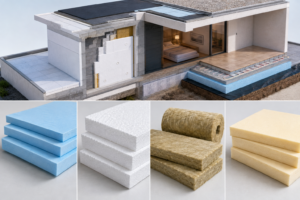
INSUboard represents a major advancement in insulation technology, designed as high-density XPS boards with a thermal conductivity as low as 0.0289 W/m·K. This ensures limited heat flow. Its closed-cell structure, free of voids, offers excellent moisture resistance (under 1% absorption), making it durable in India’s humid conditions, unlike fibrous options that deteriorate over time. Available in densities above 34 kg/m³ for walls and 38 kg/m³ for floors, these insulation sheets have compressive strengths ranging from 180 kPa to over 500 kPa. They can support heavy loads in applications such as rooftop decks and industrial flooring.
Supreme Petrochem Ltd is a leader among insulation companies in India and produces INSUboard without ozone-depleting agents, following green building standards and recycling practices. This makes it a top choice for EPS building insulation in India, where R-values (typically R-4 to R-4.4 per inch for similar EPS/XPS) provide long-term stability without settling or sagging. Whether for home insulation or large-scale commercial projects, INSUboard’s precision-cut boards come in standard sizes for easy handling, simplifying installation while maximising performance.
INSUboard EPS Building Insulation India: Applications in Construction
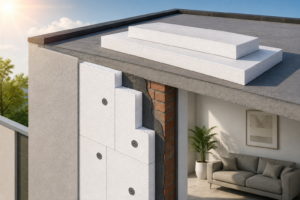
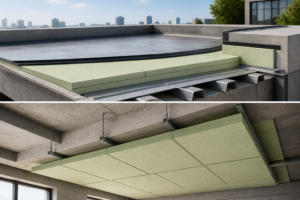
INSUboard excels in various scenarios, starting with roof insulation, where it can lower indoor temperatures by 6–8°C during peak summers when placed either over or under the deck. This reduces reliance on HVAC systems. For walls, it seamlessly fits into cavity systems or External Insulation Finish Systems (EIFS), preventing thermal bridging and condensation. Floors benefit from their high compressive strength in cold storage warehouses, industrial buildings, and residential slabs, maintaining consistent temperatures throughout the year.
In contexts of energy-efficient building materials, INSUboard helps green initiatives comply with India’s Energy Conservation Building Code (ECBC). Commercial spaces, such as offices and malls, use it for ceiling insulation to improve acoustic comfort and thermal regulation. Residential applications in bungalows or apartments lead to noticeable savings on energy bills. Its versatility extends to cold storage and marine structures, which is why it’s popular for both new builds and retrofits.
How Expanded Polystyrene Insulation Boosts Energy Efficiency
Expanded polystyrene insulation like INSUboard minimises heat transfer through its air-trapped cellular matrix. This can achieve up to 30% energy savings in typical installations, which is key as India’s building insulation market is projected to grow from USD 0.98 billion in 2024 at a 3.74% CAGR. In hot-humid climates, it reduces cooling demand by blocking solar heat, resulting in 15–30% reductions in HVAC loads. One case noted a 25% reduction in bills post-installation at a Mumbai IT park. This efficiency comes from stable R-values that last for decades, far surpassing those of materials susceptible to moisture damage.
For energy-efficient building materials, INSUboard’s low thermal conductivity reduces carbon emissions, supporting India’s renewable energy goals, projected at USD 46.7 billion by 2032. By stabilising indoor climates, it improves occupants’ well-being, reducing heat stress in the summer and draughts in the winter, while also lowering businesses’ operating costs.
INSUboard vs Other Building Insulation Materials: A Clear Winner
When comparing INSUboard to its rivals, its advantages stand out. Unlike glass wool or rock wool, which absorb moisture and lose effectiveness (up to a 50% drop in R-value in damp conditions), INSUboard’s closed-cell structure maintains performance. While polyurethane foams may provide similar insulation initially, they fall short in fire safety and long-term cost effectiveness. Mineral wools are heavier and can cause itching during installation. INSUboard is quicker to install, as its lightweight panels reduce labour costs by 20–30%. It also offers superior compressive strength for load-bearing applications.
| Feature | INSUboard (XPS) | Glass Wool | Rockwool | Polyurethane Foam |
| Thermal Conductivity (W/m·K) | 0.0289 | 0.035–0.040 | 0.032–0.040 | 0.022–0.028 |
| Water Absorption | <1% | Up to 30% | High | Low but expands |
| Compressive Strength | 180–500+ kPa | Low | Medium | High but brittle |
| Energy Savings Potential | 15–30% INSUboard | 10–20% | 15–25% | 20–35% |
| Installation Ease | High (lightweight) | Moderate (fibres) | Low (heavy) | Moderate (spray) |
| Cost per Long-term Value | Excellent | Fair | Good | Higher initial |
This comparison shows INSUboard’s advantages in India’s changing weather, where durability is more important than short-term benefits.
Benefits of Supreme Petrochem INSUboard for Green Projects
Supreme Petrochem’s INSUboard enhances green building projects through CFC/HCFC-free production and recyclability, helping meet certifications such as GRIHA. Its inclusion in expanded polystyrene insulation panels for commercial and residential applications reduces strain on the electrical grid as energy costs rise. Developers appreciate the 50% faster construction timelines made possible by prefabricated insulation sheets, aligning with urban growth objectives.
In industrial environments such as cold storage, INSUboard’s panels help maintain temperature stability, saving up to 40% on refrigeration costs in humid areas. For home insulation, it creates healthier living conditions by preventing mould and allergens, especially beneficial in regions with heavy monsoons.
Practical Installation and Maintenance Tips
Installing INSUboard requires clean, dry surfaces with staggered seams to avoid thermal bridges. Use adhesives or mechanical fasteners based on the load. For overdeck roofs, layer the insulation above waterproofing; walls are suitable for EIFS finishes. Maintenance is minimal, just annual checks for damage are enough, as its longevity (decades) exceeds that of competitors.
Safety standards are met; it is non-toxic and mould-resistant, making it safe for spaces occupied after curing.
Case Studies: Proven Impact in India
At a residential project in Delhi with INSUboard wall and ceiling insulation, homeowners noticed cooler rooms by 6-8°C during peak summer. They also felt comfortable even during winter cold snaps.
In a corporate office in Bangalore, installing INSUboard cut summertime cooling costs by 22%. It stabilised interior temperatures and reduced equipment downtime by over 30%.
These examples confirm INSUboard’s effectiveness in EPS building insulation in India, filling performance gaps often overlooked by top-ranking blogs that focus on lifecycle costs.
Frequently Asked Questions
INSUboard is Supreme Petrochem’s XPS board with closed cells, offering better thermal and moisture resistance and outperforming open-cell foams in durability.
By significantly reducing heat transfer, it provides 15–30% energy savings, helping stabilise temperatures during extreme weather.
INSUboard’s graded versions, Roof (300 kPa), Wall (180 kPa), and Floor (500 kPa), are optimised for specific applications.
Yes, it’s less than 1% water absorption, which helps prevent mould, making it ideal for monsoon conditions.
They have similar initial costs, but can yield 20–40% savings over their lifetime due to their efficiency and durability.