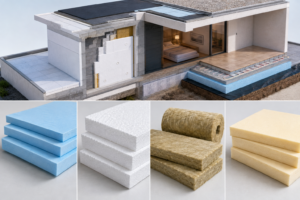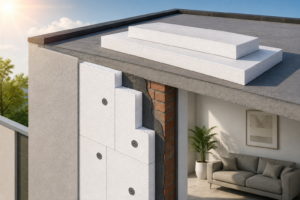
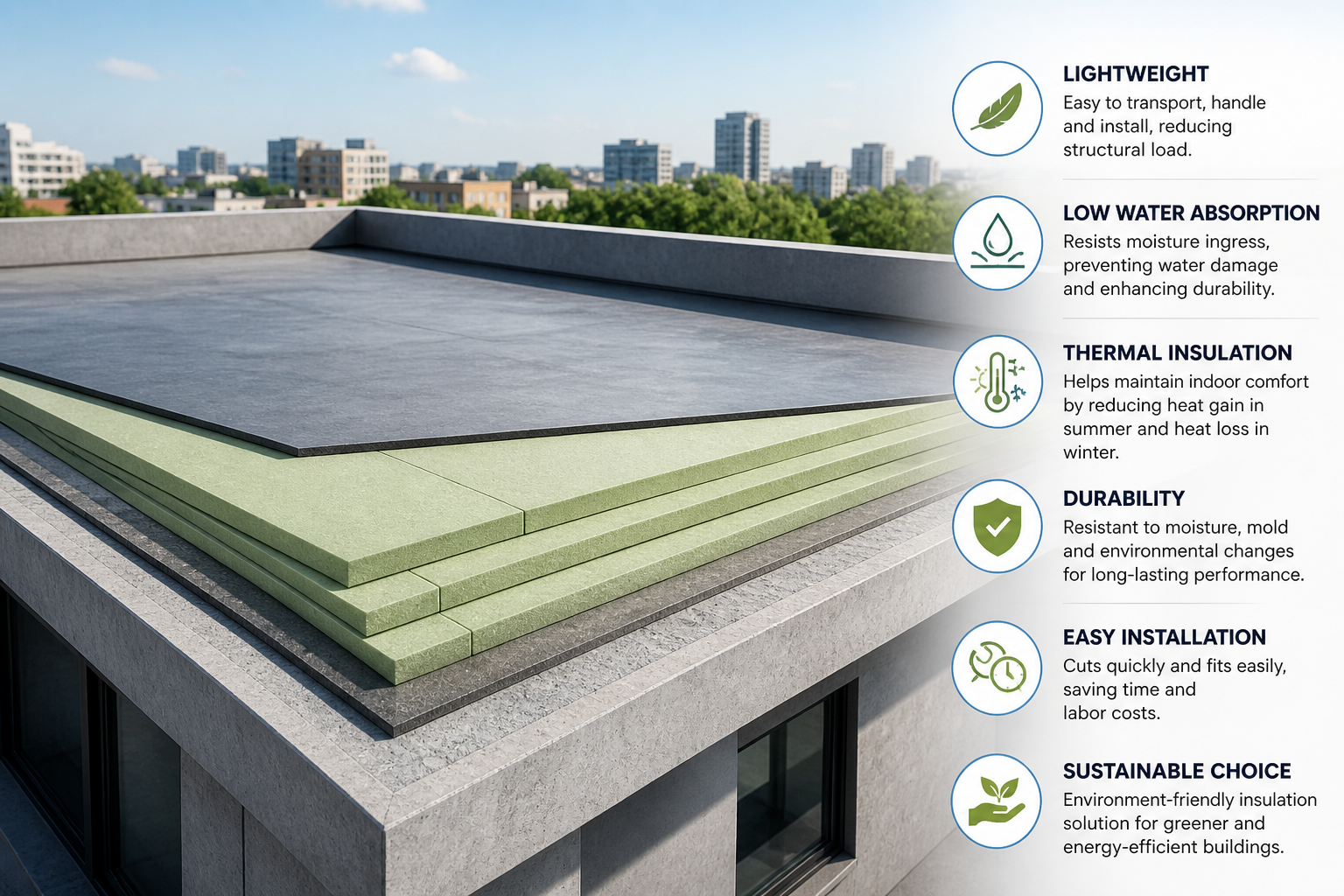
Flat roofs are common in modern Indian architecture, from busy commercial centres to extensive residential complexes. However, they face ongoing challenges like intense heat, heavy rainfall, and structural limitations. Traditional heavy insulation material often makes these issues worse, adding extra weight and increasing moisture vulnerability. This blog highlights the significant benefits of lightweight, low-water-absorption insulation boards, focusing on INSUboard from Supreme Petrochem Ltd, a leading insulation company in India that transforms flat roof construction materials for greater durability and efficiency.
We will explore why these features are important, from reducing dead loads to improving thermal performance, using practical insights often missed in general guides. Expect a detailed look at EPS insulation board properties, real-world comparisons, and tips for Indian climates where humidity challenges every material’s strength. By focusing on moisture-resistant roof insulation, builders can protect projects against rising energy costs and maintenance issues.
Why Lightweight Insulation Matters in Flat Roof Construction
Lightweight insulation boards, usually under 32 kg/m³, change the game in flat roof construction materials by minimising dead loads, which is critical as Indian commercial buildings must deal with seismic zones and height restrictions. A standard 50mm EPS insulation board weighs just 1.5 to 2 kg/m², compared to 10 to 15 kg/m² for mineral wool. This allows for slimmer supports and up to 20% savings on foundation costs. Installation is also easier; crews can handle sheets quickly, cutting labour time by 30% on high-rise buildings.
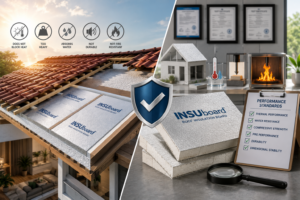
Supreme Petrochem’s INSUboard is an excellent example of a top flat roof insulation material. These boards are precision-cut for quick placement over membranes. In urban projects, such as warehouses in Mumbai, these insulation sheets enable longer spans without requiring reinforcement upgrades, combining cost savings with design flexibility.
How Low Water Absorption Insulation Boards Enhance Performance
Low-water-absorption insulation boards that absorb less than 1% of their volume maintain thermal integrity during monsoon seasons. They prevent prolonged ponding on roofs. Unlike fibrous insulation materials, which can swell and lose 40 to 50% of their R-value when wet, closed-cell boards like INSUboard resist moisture, maintaining conductivity at 0.028 to 0.030 W/m·K. This moisture-resistant roof insulation helps prevent mould growth, a common issue in 60% of flat roof failures, according to industry audits.
In humid regions of India, this property can extend roof life by 25 to 30 years, avoiding expensive replacements. Insulation companies advocate for this approach in inverted roofs, where saturation could otherwise harm under-membrane layers.
EPS Insulation Board Properties: Tailored for Flat Roofs
EPS insulation board properties excel in roof insulation: they have low density (15–30 kg/m³), compressive strength up to 300 kPa, and minimal vapour permeability. These boards trap air in stable cells, providing consistent R-values (4.0–4.5 per inch) without settling, making them ideal for ballasted or green roofs. Their recyclability meets GRIHA standards, appealing to environmentally conscious developers.
INSUboard, from a trusted insulation company in India, offers graded options, with Roof Grade at 250 kPa, which withstands foot traffic during maintenance. This addresses a gap in blogs that overlooks comprehensive needs for accessible terraces.
Best Lightweight Insulation Boards for Flat Roof Applications in India
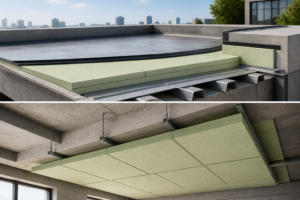
Leading choices focus on insulation sheets that balance lightness and strength: INSUboard stands out with 0.7% water absorption and thicknesses of 25 to 100mm for custom slopes. Alternatives like PIR are costlier (20–30% more) and pose fire-spread risks, while stone wool adds significant weight to structures. For inverted roof systems in India, EPS variants perform well, supporting pavers without creep.
Indian builders prefer these for retrofitting older mills, where weight limits exclude heavier flat-roof insulation materials.
How EPS Insulation Boards Resist Moisture in Flat Roof Systems
EPS insulation boards achieve moisture-resistant roof insulation through hydrophobic closed cells, absorbing less than 2% water even after being submerged for 28 days, compared to 5 to 10% for open-cell foams. This stability reduces thermal bridging, keeping U-values below 0.35 W/m²K during wet periods. EPS roofs don’t degrade after monsoons, whereas wool roofs experience leaks.
For flat roof construction materials, this means fewer callbacks, which is important since 70% of disputes arise from water ingress.
Lightweight vs Heavy Insulation: Flat Roof Comparison
Lightweight boards reduce transport costs by 40% and crane time on high-rises. In contrast, heavy options require stronger beams, increasing steel use by 15%. In terms of moisture, low-absorption units maintain 95% performance when wet, while heavier options lose 30-50%.
| Aspect | Lightweight (EPS Insulation Board) | Heavy (Mineral Wool) |
| Density (kg/m³) | 15–32 | 80–150 |
| Dead Load (50mm, kg/m²) | 1.5–2 benchmarkfoam | 10–15 |
| Water Absorption | <1% | 10–30% |
| Installation Speed | 2x faster | Slower, dustier |
| Lifecycle Cost Savings | 20–25% | Higher maintenance |
| Best for India? | Yes—seismic, humid | Dry interiors only |
This table highlights why insulation companies are shifting to lightweight options for commercial flat roofs.
Benefits of Low Water Absorption Polystyrene Boards in Roofing
These boards reduce cooling loads by 20 to 25% due to stable insulation, as polystyrene’s air pockets block conduction, the main issue in flat roofs. Structurally, they minimise beam deflection under live loads, improving safety during earthquakes. Energy-wise, a 75mm layer halves heat gain, aligning with ECBC goals for 40% efficiency gains by 2030.
In green roofs, insulation sheets stop root penetration while draining excess water, a benefit often neglected in standard guides.
How Insulation Board Weight Affects Structural Load in Flat Roofs
Every kilogram matters: heavy insulation materials can push the total dead load over 200 kg/m², requiring redesigns in accordance with IS 875 codes. Lightweight options keep the load under 150 kg/m², allowing more budget for facades. In high-rises, this can enable structures to be 10 to 15% taller without needing pile upgrades.
Why Moisture-Resistant Insulation Ensures Flat Roof Durability
Without moisture resistance, absorbed water can cause freeze-thaw cycles that damage roofs, even in warm climates, due to condensation, shortening their lifespan. Moisture-resistant roof insulation like INSUboard lasts over 50 years, reducing capital expenses by avoiding 3 to 5 re-roofs. It also improves indoor air quality by eliminating VOCs associated with dampness.
Installation and Maintenance Insights
Install on primed membranes with staggered joints, using adhesives in windy areas. For ballasted roofs, create a slope for 1:100 drainage. Regular inspections can catch shifts rare with rigid boards. Supreme Petrochem helps ensure compliance through GreenPro certification.
Frequently Asked Questions
They lessen structural demands and speed up installations, making them ideal for multi-storey buildings.
It maintains R-value in rain, preventing the 40% efficiency loss commonly seen in other materials.
Low density, high compression, and less than 1% absorption for monsoons and loads.
Yes, the 20-30% savings from durability and energy reductions outweigh the initial costs.